


The Kiawah Island golf courses Ocean Course is a Pete Dye-designed, par-72 championship layout stretching 7,876 yards along the Atlantic: ranked 30th among Golf Digest’s 100 Greatest U.S. Golf Courses and 5th among public courses in 2025-26. Green fees run approximately $600 per round. The kiawah island golf courses ocean course is open to the public, though resort guests receive tee time priority, and it demands more from the wind than from raw length. Choosing to play the kiawah island golf courses ocean course is one of the few bucket-list golf decisions that lives up to its reputation.
- Green fees: Approximately $600 per round; twilight and off-peak rates may vary seasonally.
- Tee time booking: Available through the Kiawah Island Golf Resort’s official booking platform via rguest.com; resort guests typically access earlier booking windows.
- Course stats: Par 72, 7,876 yards from the tips, Course Rating 79.1, Slope Rating 155.
- Wind impact: Coastal winds can create up to an 8-club difference hole to hole, making wind management the central skill.
- Tournament legacy: Host to the 1991 Ryder Cup, the 2012 PGA Championship (Rory McIlroy), and the 2021 PGA Championship (Phil Mickelson).
- Access: Public play is permitted; no membership required, but staying on the island improves booking access.
What Is the Most Famous Golf Course on Kiawah Island?
The Ocean Course is, without question, the most celebrated of the five championship courses on Kiawah Island Golf Resort. Designed by Pete Dye and his wife Alice Dye and opened in 1991 specifically for the Ryder Cup, it holds Golf Digest’s top ranking in South Carolina, sits 5th among all public courses in the United States, and carries the distinction of hosting more oceanside holes in the Northern Hemisphere than any other layout. Ten holes run directly along the Atlantic; the remaining eight parallel it closely.
Alice Dye’s influence deserves more credit than it typically receives. She suggested raising the entire course above the surrounding dunes so that every hole would have unobstructed ocean views. That decision also exposed every player to the full force of the coastal wind. The result, as Pete Dye later acknowledged, is effectively two courses in one: conditions shift so dramatically with wind direction that an easterly round plays nothing like a westerly round. Golf Digest noted in 2010 that the Ocean Course may be the toughest in America, citing the USGA-verified course rating of 79.1 and slope of 155 as evidence.
Kiawah Island Golf Resort offers four other championship courses: Osprey Point (Tom Fazio), Turtle Point (Jack Nicklaus), Cougar Point (Gary Player, redesigned 2017), and Oak Point (Clyde Johnston, on Johns Island). All five are excellent. But golfers who travel specifically to the kiawah island golf courses ocean course schedule the rest of their trip around a morning tee time at the Ocean Course. The other courses reward them for arriving early.

Can Anyone Play Kiawah Island Ocean Course?
Yes, the Ocean Course at Kiawah Island is open to the public. No membership is required to book a tee time or play a round. However, access is tiered: guests staying at properties booked through Kiawah Island Golf Resort directly gain earlier booking windows and, in practice, better availability on peak dates. Non-resort guests can book tee times through the same platform but typically work with a shorter booking lead time.
There is no formal posted handicap requirement to play the Ocean Course, but the course carries a USGA slope rating of 155 from the championship tees. That number matters. A slope of 155 is among the highest in the country, and it means the course plays significantly harder for mid-to-high handicappers than the yardage alone suggests. Kiawah Island Golf Resort recommends that players be honest about their skill level when choosing tee boxes. Five sets of tees range from the full 7,876 yards down to shorter forward positions that make the layout far more playable without removing the drama of the ocean exposure.
High-handicap golfers should not skip the Ocean Course entirely. Playing it from appropriate tees on a calm morning is a genuinely memorable experience. But arriving without a plan and choosing tees based on ego is how the course becomes a three-hour frustration rather than a round you talk about for years.
Where Is The Ocean Course at Kiawah Island?
The Ocean Course at Kiawah Island sits at the eastern-most end of Kiawah Island, South Carolina, with the mailing address 1 Sanctuary Beach Drive, Kiawah Island, SC 29455. The resort itself is located approximately 25 miles southwest of Charleston, placing it well outside the city but within a reasonable drive for those staying in Charleston or on nearby Johns Island.
Getting to the course involves entering through Kiawah Island’s security gate. Non-resort guests with confirmed tee times are granted access; you will need your booking confirmation at the gate. Once inside, the Ocean Course Clubhouse sits at the far eastern tip of the island. Allow yourself roughly 15 to 20 minutes from the gate to the clubhouse, especially during peak golf season when traffic on the island road can slow.
If you prefer to preview the course conditions before you leave home, EarthCam operates a live HD webcam overlooking The Ocean Course, and a hole-by-hole aerial flyover is available at BestApproachFlyovers.com. Both are genuinely useful planning tools, not just marketing material. The webcam shows real-time wind and cloud conditions. The flyover gives you a better spatial sense of the fairway angles than any static yardage book will.
Golfers who plan to bring their own clubs but want to avoid airline baggage fees should know that Ship Sticks provides direct club shipping to Kiawah Island Golf Resort. The resort links to the service directly from its own course pages.

How Much Is a Round of Golf at Kiawah Island Ocean Course?
Green fees at the Ocean Course run approximately $600 per round, based on Golf Digest’s published pricing reference. Kiawah Island Golf Resort does not publicly list a single fixed rate that applies year-round, and actual pricing varies by season, time of day, and guest status. What follows is the most practical breakdown available for planning purposes.
Pricing Tiers to Expect
Rate Type Approximate Range Notes Peak season morning (resort guest) $550 to $650+ Prime weekend and spring golf season rates Off-peak / twilight Lower than morning rates Available on select dates; fewer holes playable in winter PGA Championship event weekends Premium pricing applies Availability is extremely limited; book 12+ months ahead Non-resort guest rate Comparable to guest rate Same base green fee; access and booking window differ
The $600 figure is a useful planning anchor, not a guaranteed price. Rates shift based on Kiawah’s golf season, which peaks in spring (March through May) and again in fall (September and October). Summer rates remain high because of the family vacation demand cycle on the island. January and February are the softest months for pricing and the easiest for availability, though winter rounds on an exposed coastal course require genuine preparation for cold wind.
How to Book Tee Times
Tee times at the Ocean Course are bookable through the Kiawah Island Golf Resort’s rguest.com platform. The golf vacation planning line at 800-576-1570 is also a useful option for groups or complex itineraries where you want a human conversation about availability across multiple courses.
For peak season dates, book as far in advance as possible. Resort guests generally access booking windows earlier than the general public. If you are serious about a specific spring weekend, planning 6 to 12 months ahead is not excessive. For off-peak dates, 30 to 60 days ahead is typically sufficient. Twilight rates, where offered, appear in the booking platform and represent genuine value if you are comfortable finishing a round in fading coastal light.
What Makes The Ocean Course at Kiawah Island Worth $600?
The kiawah island golf courses ocean course earns its price through a combination of course design, wind exposure, visual drama, and tournament pedigree that no other layout in South Carolina can match. Golf Digest’s 2025-26 panel gave it a 4.8 out of 5 overall rating from 50 panelists, with sub-scores of 8.28 for Challenge, 8.13 for Aesthetics, and 8.06 for Character. Those are not marketing numbers; they reflect what serious golfers consistently report after playing the course.
The Paspalum turf used across all five Kiawah Island courses provides exceptional ball set-up and puttability, and the Ocean Course is maintained to championship standards. It is also a Certified Audubon Cooperative Sanctuary, recognized by Audubon International for protecting native bird species in the surrounding marshland. That certification matters: the course integrates with its natural environment rather than fighting it, which shapes everything from the rough character to the visual horizon behind approach shots.
Beyond pure golf credentials, the course appeared in the 2000 film “The Legend of Bagger Vance” and was the first course fully mapped in the World Golf Tour online video game in October 2008, with helicopter-mounted cameras and GPS units documenting every yard. These are cultural details, not playing tips, but they signal how completely the Ocean Course has embedded itself in the broader story of American golf.
Hole-by-Hole Strategy for the Ocean Course’s Holes
The Ocean Course’s hole-by-hole strategy centers on one principle above all others: manage your ego before you manage your ball. Wind on this course can create up to an multi-club difference between holes depending on direction and strength. No other course in the United States outside of true links venues produces that kind of variability. Before reading any specific hole tip, check the forecast and commit to adjusting every club selection you think you know.
Before your round, consider using the Strackaline digital yardage book for The Ocean Course, which maps green contours and break information for every putting surface. It is a meaningful preparation tool, particularly for a course where misreading the greens costs as many strokes as misreading the wind.
The Ocean Course at Kiawah Island — All 18 Holes
Course: Par 72 | 7,876 yards (championship tees) | Rating 79.1 | Slope 155
Design: Pete & Alice Dye, opened 1991
Key fact: 16 of 18 holes run east-west. Wind can create up to an 8-club difference on any hole.
FRONT NINE
Hole 1 — Par 4 | 396 yards | Handicap 15
The most welcoming hole on the course — deliberately so. Dye gave players the widest fairway corridors here to ease them into the round. Everything bounding left funnels toward the green, which sits at grade and is fully receptive from the front. A confidence-builder before the difficulty begins.
Hole 2 — Par 5 | 543 yards | Handicap 3
A genuine risk/reward hole. The drive asks players to decide how much of a salt marsh to bite off — the aggressive line clears the waste area bisecting the fairway and opens a wedge approach; the conservative line adds distance and leaves a longer second. The elevated green sits on the highest point of the front nine, perched between two sand ridges. Downwind, this is the best birdie opportunity on the front. Into a headwind, it’s a three-shot grind.
Hole 3 — Par 4 | 390 yards | Handicap 9
The shortest par 4 on the course, and deceptive for it. The tee is essentially an island requiring a carry over marsh to reach what looks like a wide fairway. The catch: the left-side plateau is the only approach angle that opens the elevated green cleanly. Right-side positions leave a far more difficult angle. A low runner from in front is always a viable option.
Hole 4 — Par 4 | 484 yards | Handicap 1 (Hardest hole on the course)
Two marsh carries, brutal length, and the prevailing wind. The fairway is generous — Dye removes the excuse of width here. The problem is purely distance and second-shot execution. Into a strong ocean wind, professionals are hitting fairway metals into this green. It played 26 yards longer in the 2021 PGA Championship than in 2012 and was consistently the most punishing hole all week.
Hole 5 — Par 3 | 207 yards | Handicap 11
One of only two holes that doesn’t run east-west — this one plays due south, directly toward the Atlantic. From the elevated tee, players get their first face-on view of the ocean. The green is hourglass-shaped, dividing the putting surface into two distinct lobes: a pin on one side plays nothing like a pin on the other. The wind here is almost always a crosswind, regardless of direction, making club selection persistently tricky.
Hole 6 — Par 4 | 490 yards | Handicap 13
A long par 4 running westward framed by three wind-pruned live oak trees. A slight draw off the tee eliminates the waste area right and a small pond left. The green has a repelling ridge at the back, a bowl next to the left bunker, and a fallaway rear portion — pin position is critical. Front-right is the target quadrant on approach regardless of where the flag is.
Hole 7 — Par 5 | 579 yards | Handicap 7
The second par 5 on the front nine demands a power fade — the opposite of hole 6’s draw — demonstrating Dye’s varied shot-shape demands on adjacent holes heading the same direction. The aggressive line carries the dune area creeping in from the right and opens a shorter approach; the conservative line plays left and adds distance. Downwind, this is the most gettable hole on the course. The 1991 Ryder Cup controversy — Azinger and Beck switching ball compression — happened on this tee.
Hole 8 — Par 3 | 197 yards | Handicap 17
A mid-length par 3 with an elevated green that narrows progressively as it extends away from the player, framed by tall live oaks front-left. Front pins are attackable; back pins require threading a genuinely narrow window. Missing long or right almost always finds sand. Downwind, the risk of flying long becomes significant — a bump-and-run from in front becomes the smart play.
Hole 9 — Par 4 | 514 yards | Handicap 5
The longest par 4 on the front nine, and a brutal finisher to the outward half. Dye made this a width-not-direction hole — the fairway is unusually generous, so the challenge is purely length. The green is open at the front with two large ramps on the back-right that can funnel long-iron approaches toward pins. Into a westerly wind, this is effectively an unreachable par 4 for most players.
Front Nine: Par 36 | ~3,810 yards
BACK NINE
Hole 10 — Par 4 | 447 yards | Handicap 12
A hole built on deception. Deep waste areas guard the right and appear larger than they are, triggering bailouts left. But the “safe” left position creates a harder approach angle that must carry another waste bunker short of the green. Dye deliberately made the conservative play the more demanding one. The green sits below the fairway in natural dune landscape, with a large waste area front-left and steep-faced waste at the back.
Hole 11 — Par 5 | 593 yards | Handicap 10
The longest hole on the course. Reachable in two only with the wind helping — otherwise a three-shotter for virtually the entire field. Deep waste areas run down the right side of the fairway, and a large waste area guards the green left. The elevated green sits on a dune ridge and requires a 230+ yard carry over the fronting waste to reach in two. Patience is required here.
Hole 12 — Par 4 | 484 yards | Handicap 2
The most exacting tee shot on the course. A canal angles in from the right beginning at the tee and runs all the way to the green; bunkers cluster the landing zone on the left. The approach faces the canal hugging the right side of the green with dunes and native grasses left and rear. There is no bailout right — the canal is always in play. Played 72 yards longer in the 2021 PGA than in 2012, turning what was a wedge into a mid-iron.
Hole 13 — Par 4 | 497 yards | Handicap 4
Pete Dye’s personal favorite hole on the course. A Cape-style design that swings right along the salt marsh — the more marsh a player carries off the tee, the shorter and better-angled the approach becomes. The entire right side is a diagonal marsh carry from every tee except the forward-most. The green is 41 paces deep, open at the front, and narrows at the back. No two players ever play this hole the same way, which was precisely Dye’s intent.
Hole 14 — Par 3 | 238 yards | Handicap 16
A pure Redan — the green is elevated, runs away from players to the back-left, and has a deep fronting hollow that feeds into the putting surface if the ball enters at the correct angle. The back portion of the green is hidden from the tee. A deep waste area borders the left; any miss there leaves a severe uphill chip. In the 2021 PGA Championship opening round, this hole yielded only 3 birdies against 17 bogeys, 16 double-bogeys, and an 8 — playing +0.506 shots over par.
Hole 15 — Par 4 | 466 yards | Handicap 6
A target-golf par 4 set in a natural dune area. Finding the fairway is non-negotiable — any miss off the tee leaves an awkward angle to a green that runs diagonally right and is protected on the left and back by waste areas. The green is small with little margin for error. Three-wood or long iron over driver is frequently the correct play. Front-center of the green is the safe target regardless of pin position.
Hole 16 — Par 5 | 579–581 yards | Handicap 8
The only par 5 on the back nine and the one genuine scoring opportunity in the closing stretch. A pond carry off the tee reaches a generous fairway; the green is perched high on a dune ridge with a wide opening on the right side that allows run-up approaches. Downwind, this is reachable in two and was the easiest hole in the 2012 PGA Championship all week. Phil Mickelson made birdie here in the 2021 final round, cushioning his lead before the penal 17th.
Hole 17 — Par 3 | 221 yards | Handicap 18
“There wasn’t going to be a lake on the 17th but Alice felt we needed a dramatic element at this point. Since players of Ryder Cup caliber can handle bunker shots with ease, to make a realistic challenge, we dug an eight-acre lake.” — Pete Dye
Water short and right covers nearly the entire front approach corridor. Two deep bunkers guard the left. The green is narrow, elongated, and fully exposed to ocean wind. This hole plays northeast — one of only two deviations from the course’s east-west routing — meaning the wind angle changes completely from the surrounding holes, making club selection particularly disorienting. In the 2021 PGA, it was the hardest hole on the course. In 1991, it was where Calcavecchia’s collapse and Langer’s final-hole nerves converged to decide the Ryder Cup.
Hole 18 — Par 4 | 505 yards | Handicap 14
One of the longest closing par 4s in major championship golf. The Atlantic Ocean runs hard right the entire length of the hole. Tee shots should favor the right-center to utilize a ridge crest for extra distance; the lower fairway level opens a significantly shorter approach. The elevated green runs away to the back-left and is open from the right — a right-to-left trajectory is ideal. A crowd-facing amphitheater of the clubhouse surrounds the green. Three defining moments have ended here: Langer’s missed putt in 1991, McIlroy’s 8-stroke runaway in 2012, and Mickelson becoming the oldest major champion in history in 2021.
General positioning advice for all 18 holes: Because Pete Dye designed the routing with no prevailing wind direction in mind, the outward nine and the inward nine reverse the wind’s advantage entirely on most days. Accept that some holes will play with the wind filling your sails and others will require a swing that does not exist in your normal repertoire. That is the course working as intended.
Ocean Course vs. Osprey Point vs. Oak Point: Which Course Should You Play?
Kiawah Island Golf Resort’s five courses serve different golfer profiles and trip budgets, and choosing the right combination matters more than playing every layout for the sake of it.
Course Designer Approx. Green Fee Character Best For Ocean Course Pete Dye ~$600 Exposed, wind-driven, championship challenge Bucket-list round; serious golfers; tournament history seekers Osprey Point Tom Fazio ~$200: $350 (contact resort for current rate) Wooded, marsh-framed, strategic without brutality Mid-handicappers; players wanting variety without maximum difficulty Turtle Point Jack Nicklaus ~$200: $350 (contact resort for current rate) Classic layout with three oceanfront holes Groups with mixed handicaps; families with older junior golfers Cougar Point Gary Player (redesigned 2017) ~$150: $250 (contact resort for current rate) Marsh views, approachable length, strong finishing holes Casual rounds; players staying on West Beach Oak Point Clyde Johnston ~$100: $175 (contact resort for current rate) Off-island (Johns Island), most affordable, river views Budget-conscious golfers; those wanting a quieter experience
Note: Non-Ocean Course green fees above are indicative ranges based on publicly available resort pricing references. Confirm current rates directly with Kiawah Island Golf Resort at 800-576-1570 before booking, as seasonal pricing applies across all five courses.
If you are comparing the Ocean Course to Osprey Point directly: Osprey Point is the better choice when your group includes players who want a genuinely enjoyable round without the humbling exposure of the Atlantic coast layout. Osprey Point’s Tom Fazio design rewards thoughtful shot-making across a more forgiving canvas. The greens are still demanding, the marsh views are legitimate, and you will finish the round having played actual golf rather than having survived it.
Oak Point sits on Johns Island rather than on Kiawah itself, making it the most accessible of the five courses for non-resort guests and typically the most affordable: with green fees that can run $100 to $175 less than the kiawah island golf courses ocean course rate. It is the right answer when your group needs to warm up before a more challenging round, or when the Ocean Course green fee simply falls outside the trip budget. Do not dismiss it. Clyde Johnston built a genuinely interesting routing along the river, and the quieter atmosphere on an off-island course has its own appeal.
Golfers staying at Kiawah Island Getaways properties near Cougar Point should factor proximity into their planning. Cougar Point’s West Beach location makes it the most convenient morning round for guests based on the western end of the island, and the 2017 Gary Player redesign addressed the layout weaknesses that made the original course feel like an afterthought compared to the kiawah island golf courses ocean course.
What Is the Difficulty Level for Different Golfers at Ocean Course?
The Ocean Course at Kiawah Island carries a Course Rating of 79.1 and a Slope Rating of 155 from the championship tees, which places it among the most statistically difficult layouts open to public play in the United States. These numbers come from the USGA Course Rating and Slope Database and represent a verified benchmark, not a promotional claim.
To put the slope of 155 in practical terms: a 15-handicap player can expect to shoot approximately 15 strokes over their handicap-adjusted score on the championship tees, relative to a scratch player. Five tee box options exist precisely to address this gap. Forward tees reduce yardage substantially while maintaining the ocean exposure and wind variability that define the experience.
Specific guidance by skill level:
- Scratch to 5 handicap: Play from the championship or second set of tees. Wind management is your primary challenge. Expect a legitimate test of every shot type in your bag.
- 6 to 14 handicap: Middle tees are the right call. You will still experience the full drama of the course without being overwhelmed by yardage. Budget an extra 10 to 15 minutes for wind adjustments and course pace.
- 15-plus handicap: Forward tees. The Ocean Course from appropriate tees is still an experience you will remember; from inappropriate tees, it is a scorecard you will want to forget.
High-handicap golfers who worry the course is not worth the green fee from the forward tees: it absolutely is. The visual experience, the wind off the Atlantic, and the setting justify the cost regardless of your score. The mistake is letting pride override judgment on tee selection.
How Do Caddie Services Work at The Ocean Course?
Caddie services at the Ocean Course are available and strongly recommended, particularly for first-time visitors. A knowledgeable forecaddie or walking caddie provides course management intelligence that yardage books cannot replicate: real-time wind readings by hole, pin sheet context, club recommendations based on actual conditions that day, and guidance on the subtleties of the Paspalum greens that even careful study of the Strackaline yardage book will not fully capture.
Forecaddie fees at the Ocean Course typically run in the range of $100 to $150 per bag, with a standard tip of $50 to $75 per player expected on top of that: bringing the total caddie cost to roughly $150 to $225 per golfer depending on the quality of service and how much you lean on their wind-reading expertise. A full loop with a private walking caddie commands a higher rate; confirm the exact current structure when you book your tee time, as the resort periodically adjusts caddie program pricing.
The course allows both walking with a caddie and cart play. For golfers who want the full Ocean Course experience as designed, walking the routing is the preferred approach. Pete Dye’s layouts reveal themselves through the rhythm of walking between shots in a way that cart play interrupts. That said, the course is long, the terrain along the dune line is uneven in places, and cart play is a legitimate choice for groups whose priority is pace of play rather than the walking experience.
To confirm current caddie availability, booking logistics, and fee structure, contact the Ocean Course directly at (843) 266-4670 or reach the golf vacation planning team at 800-576-1570. Caddie demand peaks during prime spring and fall golf season; if a forecaddie is important to your experience, confirm arrangements when you book your tee time rather than on arrival.
What Is the PGA Championship Legacy at The Ocean Course?
The Ocean Course’s tournament history is the deepest of any resort course currently open to public play in the United States. It has hosted the 1991 Ryder Cup, the 1997 and 2003 World Cup, the 2005 PGA Professional Championship, the 2007 Senior PGA Championship, the 2012 PGA Championship, and the 2021 PGA Championship. This record makes it the fourth course in history to host all three PGA of America major championships: the Ryder Cup, the Senior PGA Championship, and the PGA Championship.
The 1991 Ryder Cup, known as “The War by the Shore,” introduced the course to a worldwide audience under pressure conditions that exposed every design element Pete and Alice Dye had built in. The event produced some of the most dramatic moments in Ryder Cup history and established the Ocean Course’s reputation for rewarding the player who manages risk intelligently over the player who simply hits it far.
The 2012 PGA Championship saw Rory McIlroy win by eight strokes, the largest winning margin in the event’s history at that time. The 2021 PGA Championship produced an outcome that will follow the kiawah island golf courses ocean course into every future conversation about American golf history: Phil Mickelson’s victory at 50 years old made him the oldest major champion in the sport’s recorded history. Both championships were played in conditions that demonstrated the course’s capacity for drama without requiring architectural gimmickry.
For visiting golfers, the tournament legacy is more than trivia. The Ocean Course tees used in PGA Championship play are documented, the pin positions from famous holes have been photographed extensively, and the Forbes Five-Star Sanctuary Hotel on property maintains tournament history displays worth visiting before or after your round.
When Is the Best Time of Year to Play The Ocean Course?
The best time to play the kiawah island golf courses ocean course depends on what you value most: favorable weather, lower rates, or easier tee time access. No single season delivers all three simultaneously.
Spring (March through May) is peak golf season on Kiawah Island. Temperatures are comfortable, the course is in excellent condition after winter resting, and the coastal light in late afternoon is exceptional. This is also the hardest period for booking and the most expensive. If spring is your window, plan 6 to 9 months ahead.
Fall (September and October) is the second-best season for playing conditions and a slightly easier booking window than spring. Temperatures cool after the summer humidity, wind patterns stabilize compared to the volatile summer coastal air, and the course is still maintained to a high standard following the summer playing season.
Summer (June through August) brings the island’s peak family travel season, high green fees, and genuine humidity. The Ocean Course is playable and still dramatic in summer, but early tee times are essential. Heat and humidity by mid-morning make afternoon rounds physically demanding.
Winter (November through February) offers the lowest green fees and the easiest tee time access of any period. Cold, wind-amplified coastal temperatures require serious preparation. For golfers willing to dress appropriately, a winter round on the Ocean Course is a completely different and genuinely compelling experience. The course is quieter, pace of play is brisk, and the low angle of winter light on the Atlantic creates a visual atmosphere you will not find in any other season.
Practical Logistics: Getting the Most From Your Ocean Course Visit
Visiting golfers who stay on Kiawah Island itself , whether at The Sanctuary or in a private rental through a company like Kiawah Island Getaways , benefit from easier gate access and on-island proximity to the course. Groups staying in properties near Cougar Point Golf Course on West Beach can warm up with a local round before making the trip to the eastern end of the island for their kiawah island golf courses ocean course tee time.
A few practical notes that most Ocean Course guides omit:
- Arrive early. Allow at least 30 minutes before your tee time to check in, practice on the range, and absorb the wind conditions. The Ocean Course Clubhouse area is worth a few minutes of your time regardless.
- Check the webcam the morning of your round. Wind is your primary variable. A 15-minute webcam check before you leave your rental gives you a realistic preview of conditions.
- Ship clubs in advance if flying. Ship Sticks ships directly to Kiawah Island Golf Resort, which eliminates airline baggage fees and the anxiety of hoping your clubs arrive intact.
- Eat before you arrive. The Ocean Course Clubhouse offers dining, but large groups eating on-site before a round adds time you may not have budgeted. Freshfields Village, located just outside Kiawah’s security gate, is the most convenient pre-round dining stop for guests not staying on-property at The Sanctuary.
- Book caddie services at the same time as your tee time. Do not assume caddie availability on peak dates. A forecaddie on the Ocean Course is not a luxury add-on; it is a meaningful performance advantage on a layout this complex.
For golfers considering where to stay during their Kiawah golf trip, properties from Kiawah Island Getaways that include golf course access proximity can simplify the logistics significantly. The Vv at Turtle Point sits in the Turtle Point area with a short walk to the beach and close access to the island’s bike path network, making it a practical base for multi-course trips. The Tidehaus at Duneside on West Beach places guests within easy reach of Cougar Point Golf Course and Players’ Pub. If oceanfront proximity is your priority, The Vista at Shipwatch delivers direct Atlantic views between the golf and the beach. Couples and smaller groups who want a quieter base will find The Shell Seeker at Sparrow Pond a compelling option: it sits in one of the island’s most tranquil natural corridors while remaining a short drive from all five courses. Browse the full range of Kiawah Island vacation rentals to find the right fit for your group size and course priorities.
Frequently Asked Questions About The Ocean Course at Kiawah Island
Can anyone book a tee time at The Ocean Course at Kiawah Island?
Yes, The Ocean Course is open to the public. No membership or resort residency is required. Non-resort guests can book tee times through the official Kiawah Island Golf Resort booking platform. However, guests staying at Kiawah Island Golf Resort properties typically access earlier booking windows, which gives them a practical advantage on peak spring and fall dates.
How much does it cost to play The Ocean Course in 2026?
Green fees at The Ocean Course run approximately $600 per round, based on Golf Digest’s published pricing reference. Actual rates vary by season, time of day, and guest status. Peak spring and fall rounds command the highest rates; winter twilight options are typically lower. Contact the resort directly at 800-576-1570 or check the booking platform for current pricing before your trip.
What is the slope and course rating of The Ocean Course?
According to the USGA Course Rating and Slope Database, The Ocean Course at Kiawah Island carries a Course Rating of 79.1 and a Slope Rating of 155 from the championship tees, played at 7,876 yards. These numbers place the Ocean Course among the most statistically difficult public courses in the United States. Five sets of tees provide more accessible options for higher-handicap players.
Is a caddie required at The Ocean Course?
Caddies are not mandatory at The Ocean Course, but they are strongly recommended, especially for first-time visitors. Forecaddie fees typically run $100 to $150 per bag, with a tip of $50 to $75 per player expected on top. Contact the Ocean Course at (843) 266-4670 when booking your tee time to confirm caddie availability and current fees, particularly during peak season.
How far in advance should I book a tee time at The Ocean Course?
For peak spring season dates (March through May) and popular fall weekends, booking 6 to 12 months in advance is advisable. For off-peak periods including winter months and weekday morning times, 30 to 60 days ahead is typically sufficient. Resort guests generally access earlier booking windows than non-guests. Use the official rguest.com booking platform or call the golf vacation planning line at 800-576-1570.
What is the cheapest golf course on Kiawah Island?
Oak Point, designed by Clyde Johnston and located on Johns Island just outside Kiawah Island’s main gate, is typically the most affordable of the five Kiawah Island Golf Resort courses: with green fees that can run $100 or more below the kiawah island golf courses ocean course rate. It offers river views, a quieter atmosphere, and serves as an excellent warm-up round before a more demanding outing at Osprey Point or the Ocean Course. Contact Kiawah Island Golf Resort directly for current Oak Point green fee rates.
Which Kiawah Island golf courses are open to the public?
All five Kiawah Island Golf Resort courses , including the Ocean Course, Osprey Point, Turtle Point, Cougar Point, and Oak Point , are open to public play. Resort guests receive priority tee time access and broader booking windows, but no course on the island is restricted to members or residents only. Tee time availability varies significantly by season and day of week.
What is the best hole on The Ocean Course at Kiawah Island?
Hole 17 is widely regarded as one of the most memorable par-3s on the course, offering multiple tee placements that make it play as a genuinely different challenge each visit. Hole 4, the course’s number 1 handicap hole at 453 yards, is the most demanding. But the stretch of oceanfront holes beginning on the back nine , where the Atlantic is fully visible on approach shots , is the collective highlight that most returning players identify as the course’s defining sequence.
Is Playing The Ocean Course Worth It? A Practical Verdict
The kiawah island golf courses ocean course is worth every dollar of the approximately $600 green fee, provided you approach it prepared. That means choosing the right tee boxes honestly, checking wind conditions before you leave your rental, booking a caddie if the budget allows, and accepting that this course will expose weaknesses in your game that a resort layout never could.
The Kiawah Island golf courses as a collection, with the Ocean Course at the center, represent one of the most complete golf destinations in the country. The combination of Pete Dye’s championship design, the PGA Championship tournament legacy, and the Audubon-certified natural setting along the Atlantic produces a round that holds up in memory long after the scorecard is irrelevant.
For golfers planning a Kiawah Island trip in 2026, the practical sequence is straightforward: book the kiawah island golf courses ocean course tee time first, then build the rest of the trip around it. Use Oak Point or Cougar Point as the warm-up round the day before. Choose your accommodation based on which end of the island best supports your course priorities, and factor in the 25-mile distance from Charleston if you plan to combine a golf trip with a city visit.
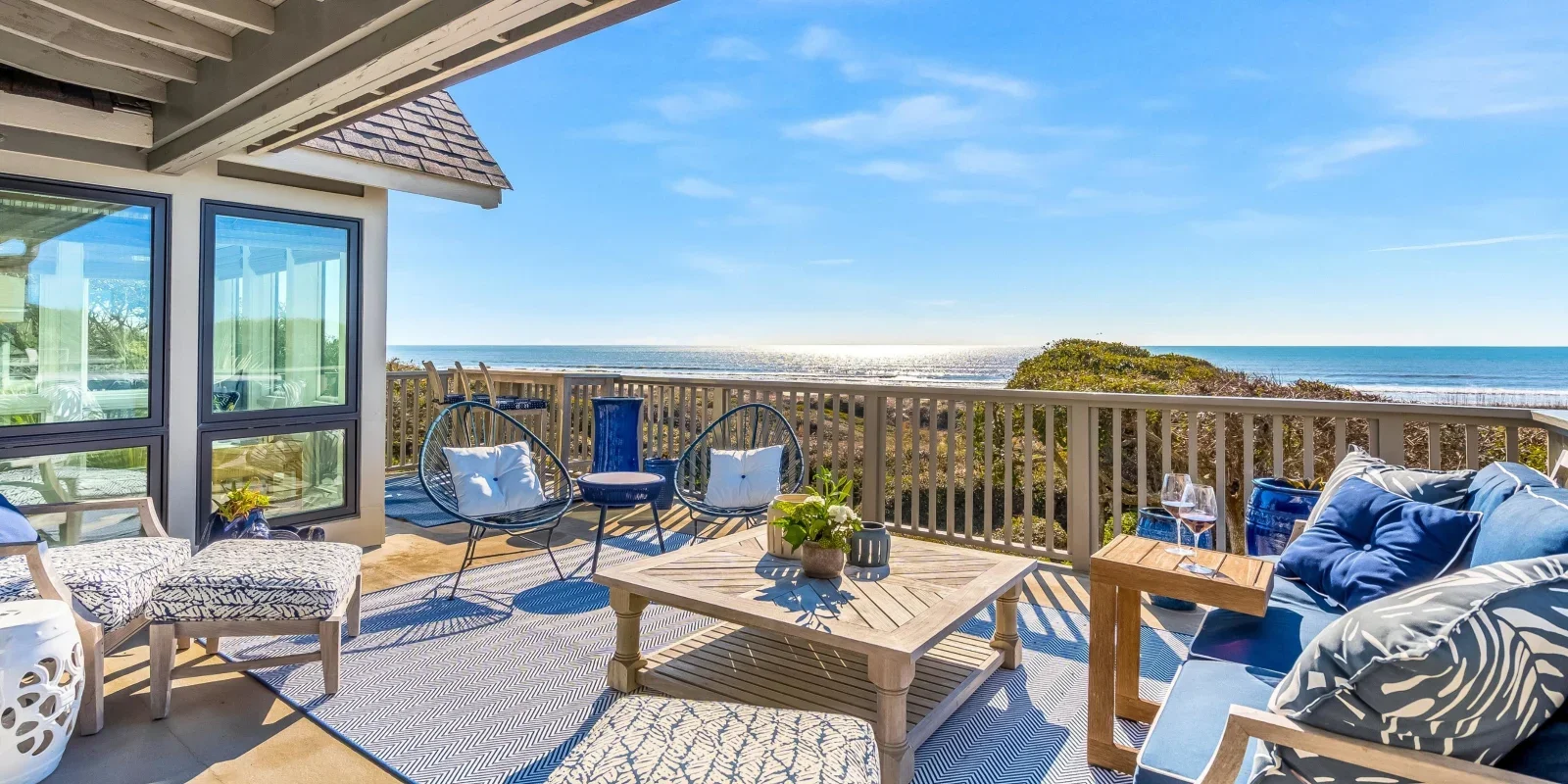
Kiawah Island Getaways offers a curated selection of private vacation rentals on the island, from oceanfront properties with direct beach access to lagoon-view villas near Turtle Point, giving golf groups and couples alike a comfortable base that the Ocean Course itself does not provide. If you want an oceanfront deck steps from the beach and a short drive to the Ocean Course, The Vista at Shipwatch is the strongest choice in the portfolio. For multi-bedroom groups who want to be near Turtle Point and the island’s central bike path network, The Vv at Turtle Point delivers the best combination of space and course proximity. Browse available properties and plan your round from a home that fits your group at Kiawah Island Getaways.
Whether you are planning your first round at the Ocean Course or returning to take on the back nine with a different wind, having the right place to stay on Kiawah Island makes the experience complete. Explore the full portfolio at Kiawah Island Getaways and secure your dates before spring golf season fills the island.
Written by Benjamin Lawson, Owner & Operator at Kiawah Island Getaways


