

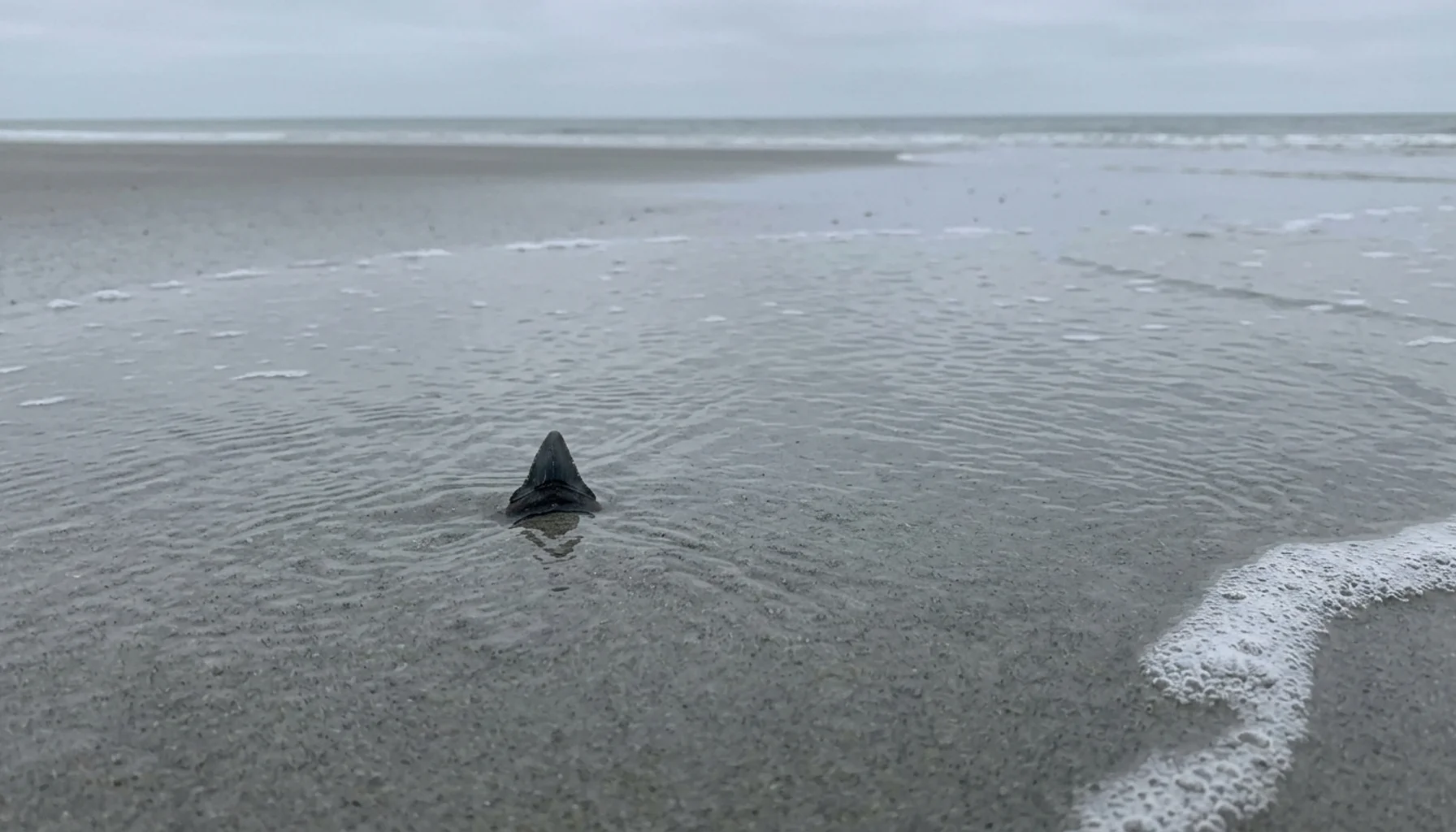
Shark tooth hunting in the Charleston, SC area is one of the most genuinely rewarding outdoor activities on the South Carolina coast, not just for kids but for anyone willing to walk a beach with their eyes down. The sediment beds beneath Charleston’s barrier islands are ancient seafloor, and every tide cycle pushes fossilized shark teeth, Ice Age mammal bones, and megalodon specimens onto the surface. You can find real fossils here, including teeth the size of your palm, without any prior experience or specialized equipment.
-
The Charleston, SC area sits above one of the richest fossil-bearing seafloors on the Atlantic coast, making shark tooth hunting a legitimate and highly rewarding activity for families, couples, and solo collectors in 2026.
-
Morris Island, accessible from Folly Beach by boat, is the single best location for finding shark teeth including megalodon specimens near Charleston SC, with guided tours departing from Bowens Island Road.
-
The best conditions for shark tooth hunting are a receding low tide on a calm day, ideally in the 48 hours after a storm that reshuffles surface sediment and exposes buried fossils.
-
Charleston Fossil Adventures, founded by published paleontologist Ashby Gale, offers small-group tours capped at 6 people ranging from $99 to $325 per person depending on duration and number of islands visited.
-
DIY shark tooth hunting is legal on South Carolina public beaches as long as you collect only from the surface with no digging or tools, in compliance with the South Carolina Underwater Antiquities Act.
-
Guests staying on Kiawah Island are approximately 30 to 40 minutes from Folly Beach and the Morris Island tour departure points, making a fossil hunting day trip a natural addition to any island stay.
The Lowcountry’s unique geology has been drawing fossil hunters for generations. Charleston sits on a geological formation called the Ashley Formation, a phosphate-rich layer of ancient marine sediment deposited when much of the South Carolina coast lay beneath a shallow tropical sea. When storms erode the barrier islands and tidal currents do their work, that ancient layer breaks the surface. The result is a beach scattered with the teeth of creatures that lived 3 to 25 million years ago alongside the bones of Ice Age mammals that roamed the same ground far more recently.
Whether you book a guided expedition to Morris Island or walk Folly Beach on your own at low tide, the Charleston coast rewards attention and patience. At Kiawah Island Getaways, we regularly hear from guests who turn a rainy morning or a post-beach afternoon into a fossil hunting excursion and come home genuinely amazed at what they found. This guide covers everything you need to plan that day: where to go, when to go, what to look for, and how to stay on the right side of South Carolina law while doing it.

The Ocean Blue at Seascape
Where Is the Best Place to Find Shark Teeth in Charleston, SC?
The best place to find shark teeth near Charleston, SC is Morris Island, a remote, uninhabited barrier island accessible only by boat from Folly Beach. Morris Island’s north end concentrates the dark phosphatic gravel layer that contains the majority of fossilized shark teeth, megalodon specimens, and Ice Age mammal bones found in the Charleston area. The combination of strong tidal currents, storm erosion, and the island’s exposed position make it consistently more productive than any mainland or easily accessible beach.
Morris Island: The Premier Fossil Beach Near Charleston
Morris Island is a natural, publicly accessible barrier island located roughly a 20-minute boat ride from the Folly Beach area. The island is undeveloped and protected, which means no crowds, no vendors, and no vehicles churning up the sand. That preservation is exactly why it produces so many fossils: the sediment is disturbed only by water and weather, and each tide cycle reveals new material on the surface.
The north end of Morris Island is the target zone. Here, the beach transitions from fine white ocean sand to a coarser, darker mix of gravel and phosphate pebbles. That dark layer is your signal. Fossilized shark teeth are almost always black or dark brown (the original ivory has mineralized over millions of years), and they stand out clearly against the light sand but blend into gravel. Train your eye to look for angular black shapes with a triangular profile.
Access to Morris Island requires a boat. All three major tour operators in the Charleston area depart from the Folly Beach vicinity. Charleston Outdoor Adventures departs from 1871 Bowens Island Road, adjacent to Folly Beach. Charleston Fossil Adventures departs from Folly Beach with a 20-minute boat ride each way. Independent kayakers occasionally attempt the crossing, but the tidal currents between Folly Beach and Morris Island are strong and the trip is not recommended without significant paddling experience.
Why the Charleston Area Has So Many Shark Teeth
The Charleston area’s extraordinary concentration of fossil shark teeth comes down to geology. Specifically, it comes down to the Ashley Formation, a Miocene-era marine deposit laid down when a warm, shallow sea covered much of the South Carolina Lowcountry approximately 15 to 25 million years ago. That ancient sea was home to a dense ecosystem of sharks, rays, and large marine mammals, and their remains accumulated in the seafloor sediment over millions of years.
The phosphate-rich nature of this sediment is critical: phosphate minerals preserve organic material exceptionally well, which is why shark teeth, whale bones, and fish vertebrae survive in such numbers. Later geological events, including Ice Age sea level changes, buried this layer under younger sediments. Coastal erosion, particularly on the exposed barrier islands, brings it back to the surface. Morris Island sits in a high-energy tidal zone where erosion is constant. That is why teeth appear on the beach after every storm and after most significant tidal cycles. The supply, in geological terms, is not going anywhere soon.

The vV at Turtle Point
Can I Find Shark Teeth at Folly Beach?
Yes, you can find shark teeth at Folly Beach, though the concentration is lower than on Morris Island. Folly Beach is a publicly accessible, driveable barrier island south of Charleston, and its south end (near the Folly Beach County Park) and the area around the Folly Beach Pier produce fossil finds regularly, especially after storms. The south end of Folly Beach is closest to the same phosphate sediment belt that makes Morris Island so productive, and experienced hunters know to focus there rather than the more popular central beach sections.
DIY Shark Tooth Hunting at Folly Beach
Self-guided shark tooth hunting at Folly Beach requires no booking, no boat, and no guide fee. You can drive directly to the south end of the island and walk the beach at low tide. The key is knowing what you are looking for: small, triangular, shiny black or dark brown shapes in the wrack line (the band of material left by the last high tide) or in the shallow surf wash.
Bring a small mesh bag or container for your finds. Some hunters use a sand sifter or colander to sift through the wet sand in the swash zone, which is entirely legal as long as you are not digging. Surface collection is permitted under South Carolina law. Digging, even with your hands, enters a legal grey area and is prohibited on protected beaches and in state waters. Keep your collection to what is visible on the surface and you are in full compliance.
Folly Beach is a full public beach with parking, restrooms, and food options nearby. It works especially well for families with young children who want a self-guided experience without committing to a multi-hour boat tour. You probably will not find a megalodon tooth on a casual afternoon walk, but smaller mako and tiger shark teeth are genuinely findable with a focused hour at low tide. For an overview of the full range of outdoor activities available for families along the South Carolina coast, our island activity guide covers options across all ages and energy levels.
What Time and Tide Conditions Are Best?
The best conditions for shark tooth hunting near Charleston, SC are a receding or low tide on a calm, clear day, ideally within 48 hours following a storm. Here is why each factor matters:
-
Low tide: Exposes the widest possible beach surface, including the shallow nearshore zone where waves concentrate and deposit fossil material. The 1 to 2 hours before and after low tide are the most productive window.
-
Receding tide: As the water pulls back, it deposits fossil material in the swash zone in real time. Walking into a receding tide means you are scanning freshly exposed ground.
-
Post-storm timing: Storms agitate and redistribute sediment, bringing buried material to the surface. The first clear, low-tide morning after a coastal storm is the single best fossil hunting opportunity available.
-
Morning light: Low-angle morning sun creates better contrast between the dark fossil material and the lighter sand than midday overhead light. Early starts also beat the crowd on popular sections of Folly Beach.
-
Calm surf: Rough water makes walking the swash zone unsafe and reduces visibility of small teeth in the churned sand. Aim for days with surf under 2 feet if possible.
In terms of seasons, shark tooth hunting near Charleston, SC is a year-round activity. Water temperature does not affect fossil availability. Spring and fall offer the most comfortable walking temperatures. Summer produces the largest crowds on Folly Beach, which can churn up the sand and reduce finds in heavily trafficked areas. Winter visits, particularly after nor’easters, can be some of the most productive of the year on a cold, quiet beach.
Are There Shark Teeth in South Carolina? What Species Can You Actually Find?
South Carolina is one of the best states in the eastern United States for fossil shark teeth, and the Charleston area specifically yields teeth from multiple species spanning tens of millions of years of evolutionary history. Species documented from Morris Island and the surrounding barrier islands include mako sharks, tiger sharks, great white sharks, and megalodon. Beyond shark teeth, the same beaches produce whale vertebrae, fish otoliths (ear bones), sea turtle shell fragments, and Ice Age megafauna bones including mammoth, mastodon, ground sloth, tapir, bison, and horse.
Megalodon Teeth: The Crown Jewel of South Carolina Fossil Beaches
Megalodon teeth are the most coveted find on any South Carolina fossil beach. Megalodon (Otodus megalodon) was an extinct shark species that reached lengths exceeding 50 feet, and its teeth reflect that scale: the largest specimens measure over 7 inches in length, roughly the size of an adult human hand. They are thick, triangular, and serrated along both edges, with a characteristic root structure that distinguishes them from other large shark teeth.
In the Charleston area, megalodon teeth are genuinely findable on guided tours to Morris Island, though they are not common. Most successful megalodon finds on guided tours are 2 to 4 inch specimens rather than the record-breaking 6 or 7 inch pieces. Complete, large specimens are rare. Partial teeth and broken crowns turn up more frequently and are still impressive finds. According to the Garden and Gun Magazine expert guide on finding shark teeth, the best megalodon finds in South Carolina come from the phosphate gravel zones of the barrier islands, not from ocean beach swimming areas.
The mineralization process gives all South Carolina shark teeth their distinctive dark color. The original tooth material, which is similar in composition to bone, gets replaced over millions of years by phosphate and iron minerals from the surrounding sediment. The result is a tooth that is denser than the original and uniformly black, dark grey, or dark brown. Teeth that appear white or cream-colored on South Carolina beaches are almost always modern, shed naturally by living sharks, and not ancient fossils.
How to Tell Species Apart as a Beginner
A beginner’s identification framework for South Carolina shark teeth, based on the most common species found near Charleston:
-
Megalodon: Very large (over 2 inches for even partial specimens), thick cross-section, coarse serrations along both edges, wide triangular shape with a pronounced root. Dark black or grey. These are unmistakable once you hold one.
-
Mako shark: Narrow, curved, smooth edges with no serrations. Long and pointed. Typically under 2 inches. Very glossy surface. Mako teeth are common on South Carolina barrier islands and are often the first shark tooth a beginner identifies correctly.
-
Tiger shark: Distinctive curved tip with serrations on both edges, but the serrations are finer than megalodon. The tooth has a slight notch near the base on one edge. Medium size, typically 1 to 2 inches.
-
Great white shark: Triangular like megalodon but smaller and with finer, more regular serrations. The root is shallower relative to the crown than on megalodon teeth. Great white teeth from the 1-to-3-inch range are relatively common in Charleston-area fossil beds.
Ashby Gale of Charleston Fossil Adventures co-authored “A Beachcomber’s Guide to Fossils,” published by the University of Georgia Press, which features over 1,200 photographs of common beach fossils from Texas to New Jersey. It is the single best reference for identifying South Carolina finds at home, and it covers all major shark species alongside marine mammal and Ice Age megafauna bones.
You can also learn about the remarkable wildlife visible on Kiawah Island’s beaches and waterways, including bottlenose dolphins and loggerhead sea turtles, which share the same coastal ecosystem that produced these ancient fossil beds.
What Do the Guided Tours Near Charleston Actually Offer?
Guided shark tooth and fossil hunting tours near Charleston, SC offer boat transportation to barrier islands that are inaccessible by foot, expert identification help in the field, and legal compliance guidance under the South Carolina Underwater Antiquities Act. All three major operators depart from the Folly Beach area and access Morris Island or surrounding barrier islands. The primary difference between operators is group size, tour duration, the paleontological expertise of the guide, and price.
Charleston Fossil Adventures: The Gold Standard
Charleston Fossil Adventures is the most authoritative guided tour option near Charleston and the one worth booking if you are serious about the experience. The company was founded in 2016 by Ashby Gale, a published paleontologist and former Interpretive Park Ranger at Edisto Beach State Park, where he curated the park’s fossil collection. Gale’s scientific background puts this tour in a different category from naturalist-led walks: he can identify every specimen you find, explain its geological context, and help you understand what you are holding at a level no general nature guide can match.
Charleston Fossil Adventures has been voted the top tour guide and outdoor activity in Charleston four times, according to local awards, and maintains an active standing with the South Carolina Institute of Archaeology and Anthropology’s Maritime Research Division, the state agency that oversees legal fossil collection in South Carolina waterways. That standing is not incidental: it signals that every CFA tour operates in full compliance with state law.
Tours depart from Folly Beach with a 20-minute boat ride each way. Groups are strictly capped at 6 people (up to 12 by special request), which means you actually get field time with the guide rather than watching from the back of a crowd. Every tour includes a complimentary fossil identification session. The Charleston Magazine feature on Ashby Gale and Charleston Fossil Adventures provides an excellent look at the depth of expertise behind these tours.
Charleston Outdoor Adventures and Lowcountry Coastal Excursions
Charleston Outdoor Adventures (COA) offers a 4-hour guided fossil and shark tooth hunting tour departing from 1871 Bowens Island Road, which sits adjacent to Folly Beach. The tour involves a 4 to 6 mile round-trip hike led by a naturalist guide, costs $85 per adult and $55 per child (ages 12 and under), and requires a minimum of 4 participants for the tour to operate. COA uses a Carolina Skiff Bay Boat and Alpha Cat Catamaran, neither of which has onboard restrooms, so plan accordingly. COA is a solid choice for budget-conscious families who want guide access without the premium pricing of a specialized paleontology tour.
Lowcountry Coastal Excursions offers 2-, 3-, and 4-hour shark tooth, shell, and fossil hunting excursions to barrier islands including Morris Island, with both shared and private charter options. The company’s tour pages are lighter on detail than CFA or COA, but they represent a flexible option for groups that want to customize duration or book a private experience without the minimum-participant requirements some operators impose.
Tour Comparison: Pricing, Duration, and What to Expect
The table below summarizes verified pricing and logistics for the three main shark tooth hunting tour operators near Charleston, SC, based on confirmed data as of 2026. All tours access Morris Island or comparable barrier islands via boat from the Folly Beach area.
Operator Tour Options Price (Adult) Price (Child) Duration Group Size Expert Type Charleston Fossil Adventures 1 Island ($125), 2 Island ($225), 3 Island ($325), Sharks & Shells ($175), Barrier Island ($225) $125 to $325 $99 to $199 2 to 6 hours 6 (up to 12) Published paleontologist Charleston Outdoor Adventures Fossil Hunting Tour $85 $55 4 hours Min 4 required Naturalist guide Lowcountry Coastal Excursions Shared & Private Charters (2, 3, 4 hr) Varies by duration Varies 2 to 4 hours Flexible Charter guide
The honest recommendation: if you are visiting the Charleston area specifically for fossil hunting, book with Charleston Fossil Adventures. The difference between a naturalist guide and a published paleontologist is significant when you are trying to identify what you have found, understand its age, and learn why this particular spot produces so many remarkable specimens. The premium over COA’s pricing is justified by both group size limits and scientific depth. If budget is the primary constraint, COA’s $85 adult rate makes the Morris Island experience accessible without a significant financial commitment. You can also read the Charleston Fossil Adventures TripAdvisor reviews to see how other visitors rated each tour type before booking.

The Tidehaus at Duneside
What Are the Rules for Fossil Hunting in South Carolina?
Fossil hunting in South Carolina’s waterways and public beaches is governed by the South Carolina Underwater Antiquities Act, administered by the South Carolina Institute of Archaeology and Anthropology’s Maritime Research Division. The law applies to submerged land and navigable waterways, which includes the beaches and tidal zones of barrier islands like Morris Island. Understanding the rules before you go protects you legally and preserves the resource for future visitors.
The core rules are straightforward:
-
Surface collection only: You may pick up fossil material that is visibly exposed on the surface. No digging of any kind, with or without tools, is permitted.
-
No tools: Shovels, picks, rakes, or any instrument used to excavate or dislodge material from the substrate is prohibited. A hand sifter used in the water wash zone is generally considered surface collection; a shovel is not.
-
Personal quantities: Fossils collected for personal, non-commercial use are generally permitted under state law. Commercial collection (collecting to sell) requires a separate permit.
-
Protected sites: Some areas, particularly around historic shipwrecks and designated archaeological sites, have additional restrictions. Morris Island’s beach dunes are protected for both environmental and historic reasons; collecting from the dune face or vegetation line is not permitted.
-
No trespassing: Morris Island is publicly accessible by water but accessing it by crossing private property is not. All three major tour operators access the island legally from the water side.
All reputable tour operators enforce these rules actively. Charleston Fossil Adventures, specifically, has maintained good standing with SCIAA’s Maritime Research Division since its founding in 2016. For broader context on fossil hunting regulations across South Carolina, the Discover South Carolina fossil hunting guide covers state-level rules with additional regional context.
How Much Should I Pay for a Megalodon Tooth?
Megalodon tooth prices vary enormously based on size, condition, and completeness, and the range is wide enough to make it worth understanding before you buy or sell. For a fossilized megalodon tooth found in South Carolina, the general market in 2026 looks roughly like this:
Size Condition Typical Price Range Under 3 inches Good, partial serrations $15 to $75 3 to 4.5 inches Good to excellent $75 to $300 4.5 to 5.5 inches Excellent, full serrations $300 to $1,000 5.5 to 6.5 inches Museum grade, complete $1,000 to $5,000+ Over 6.5 inches Exceptional, auction-grade $5,000 to $50,000+
These are typical secondary market ranges and not guarantees. Size is the single largest price driver, followed by the completeness of the serrated edges (fully intact serrations are far rarer than worn edges), root completeness, and the tooth’s color and surface quality. Teeth with enamel repairs or composite fills are worth significantly less than unrestored specimens. Discoloration from sand staining reduces value; natural mineralization variation does not.
For personal finds from tours or self-guided beach walks, small teeth (under 2 inches) are the most common and are worth primarily their sentimental value unless they are in exceptional condition. A 2 to 3 inch megalodon tooth in good condition is a genuinely nice find worth a modest amount on the secondary market. Finding anything over 4 inches on a public beach is rare enough that you would want an expert evaluation before assigning a value.
Be cautious of very cheap megalodon teeth (under $10) sold in tourist shops, as many of these are reproductions rather than genuine fossils. Genuine fossils feel significantly heavier than plastic or resin reproductions and have natural surface variation rather than uniform molded texture. When in doubt, ask a tour guide or consult a fossil dealer with verifiable credentials.
Pro Tips for a Successful Day on the Fossil Beaches
A few practical details separate productive fossil hunters from people who walk for two hours and find nothing. These are the specifics that tour guides know and most online articles skip.
What to Bring
-
Mesh bag or fine mesh colander: For surface sifting in the swash zone and carrying finds without losing small teeth.
-
Polarized sunglasses: Reduce glare on wet sand, which dramatically improves your ability to spot dark fossil material in the shallow water wash.
-
Water shoes or old sneakers: Morris Island beaches include shell hash and phosphate gravel that shreds bare feet. Flip flops are inadequate for a 3 to 5 mile beach hike.
-
Sun protection: The barrier islands have minimal shade. A hat, long sleeves, and reef-safe sunscreen are not optional in South Carolina’s summer, when UV index regularly hits extreme levels.
-
Water and snacks: COA’s vessels have no restrooms and tours run 3 to 4 hours. Pack more water than you think you need.
-
Ziplock bags: For keeping your wet finds separated from dry items in your bag.
Where to Look on the Beach
-
The wrack line: The band of debris left by the last high tide concentrates shell and fossil material. Walk it slowly and systematically.
-
The swash zone: The area where waves wash up and pull back over wet sand. Many teeth are visible momentarily in the thin wash before sand covers them again. You need to move with the water.
-
Dark gravel concentrations: Patches of dark phosphate gravel on the beach surface are a strong indicator of the same sediment layer that produces shark teeth. Spend extra time in these zones.
-
Behind wave berms: Low crests of sand created by wave action sometimes trap heavy fossil material in the pocket behind them. Check the low-lying areas immediately behind any berm ridge.
Patience is more predictive of success than experience. Walk slowly, scan systematically, and resist the urge to cover maximum distance. Experienced fossil hunters often walk less than half a mile in two hours and come home with more finds than someone who covered three miles at a normal walking pace. The fossils are there. You just need to slow down enough to see them.
What to Do With Shark Teeth After You Find Them
Post-hunt care and display is one of the most consistently overlooked parts of the shark tooth hunting experience, and it is an area where no competitor guide provides real guidance. Here is what to do from the moment you get back to your rental:
Cleaning Your Finds
Rinse shark teeth in fresh water immediately after returning from the beach to remove salt and sand. For surface dirt, a soft toothbrush and water removes most debris without damaging the tooth. Avoid harsh chemical cleaners or ultrasonic cleaners on unrestored specimens; these can damage the surface enamel or accelerate existing cracks.
For teeth with stubborn matrix (the rock or sediment adhering to the root), a wooden toothpick is the safest removal tool. Metal picks can scratch the enamel surface. Work slowly and stop if the matrix is firmly integrated with the root, as forcing removal can break the root entirely. Many collectors prefer to leave root matrix in place as evidence of authenticity and provenance.
Drying and Storage
Air-dry your cleaned teeth completely before storage, ideally over 24 to 48 hours in a dry, room-temperature environment. Wrapping damp teeth in tissue or cloth promotes mold growth in the root structure. Once dry, fossil shark teeth are stable and durable; they have survived millions of years in sediment and will survive indefinitely in a dry interior environment.
For storage, small compartmented boxes (like jewelry boxes or fishing tackle trays) work well. Identify each tooth with a small label noting where and when it was found. Even modest finds gain value and meaning from clear provenance documentation, and if you return to the same beaches in future years, tracking your finds by location helps you refine your hunting spots over time.
Display Options
Fossil shark teeth display beautifully in a few straightforward ways: mounted on mineral specimen stands, arranged in a shadow box frame with a labeled map of the collection site, or displayed in a glass apothecary jar as a collection. Larger megalodon teeth display effectively on standard museum-style mineral specimen bases, which are widely available from fossil dealers. A well-documented collection from a single location, such as a Morris Island trip, makes a far more compelling display than scattered teeth from multiple unnamed sources.
Children especially benefit from a simple journal approach: each tooth gets a page with a pencil rubbing, size measurement, and brief description of where it was found. This turns the fossil hunting trip into an ongoing scientific project rather than a one-day event.
Planning Your Fossil Hunting Trip from Kiawah Island
Kiawah Island sits approximately 30 to 40 minutes from Folly Beach by car, making a fossil hunting day trip straightforward to incorporate into any island stay. From Kiawah Island, head north on Betsy Kerrison Parkway to Johns Island, then follow the Folly Beach connector across James Island to Folly Beach itself. The drive is easy and well-signed, and parking at the south end of Folly Beach is available in multiple municipal lots.
For guided tours departing from Bowens Island Road (Charleston Outdoor Adventures), add roughly 5 to 10 minutes to the drive time from Folly Beach’s main strip. For Charleston Fossil Adventures, tours depart directly from Folly Beach, making it one of the most convenient day trips available from Kiawah Island.
The ideal structure for a fossil hunting day from Kiawah Island looks like this: depart the island by 7:00 or 7:30 AM to catch a morning tour or an early low tide on Folly Beach’s south end. Most guided tours launch between 8:00 and 9:00 AM and return by noon or early afternoon. That leaves plenty of time for lunch on Folly Beach or a stop in Charleston before returning to Kiawah Island for the evening. Families staying at the Tidehaus at Duneside on Kiawah’s West Beach can check tide charts against their schedule and plan the fossil hunting day for a morning when tides at Folly Beach align with a 7:30 AM departure from the island.
Check the tide chart for Folly Beach specifically, not for Kiawah Island, as local tidal timing can differ by 30 to 45 minutes between locations. The National Oceanic and Atmospheric Administration (NOAA) publishes free tide predictions for Folly Beach at tidesandcurrents.noaa.gov. Look for days when low tide falls between 7:00 AM and 11:00 AM for the best fossil hunting window combined with manageable summer temperatures.
For guests who want to make the most of the natural environment on Kiawah Island itself before or after the fossil hunting excursion, Kiawah Island Getaways maintains a full guide to the Kiawah Island Nature Center, which offers its own educational programming on the local ecosystem, and a guide to the dolphin strand feeding behavior unique to Kiawah Island’s beaches. The same coastline that produces fossil shark teeth still supports a thriving community of living sharks, dolphins, and sea turtles worth observing during your stay.
Kiawah Island Getaways recommends pairing the fossil hunting excursion with a visit to the Freshfields Village dining and shopping hub on the way back to the island for a casual dinner. The village sits just outside Kiawah’s gate and offers multiple casual to mid-range dining options without the need to drive all the way into Charleston after a long beach day.
Frequently Asked Questions
Where is the best place to find shark teeth in Charleston, SC?
The best location for shark tooth hunting near Charleston, SC is Morris Island, an uninhabited barrier island accessible only by boat from the Folly Beach area. Morris Island’s north end concentrates the phosphate gravel layer that produces the highest density of fossilized shark teeth, including megalodon specimens. Guided tours with Charleston Fossil Adventures and Charleston Outdoor Adventures both access Morris Island and represent the most reliable way to reach productive hunting ground.
Can I find shark teeth at Folly Beach without a guided tour?
Yes, self-guided shark tooth hunting at Folly Beach is possible and legal. Focus on the south end of Folly Beach near Folly Beach County Park, which is closest to the same fossil-bearing sediment belt that makes Morris Island productive. Walk the wrack line and swash zone during a low or receding tide, ideally in the 48 hours after a storm. Surface collection with no digging tools is fully permitted under South Carolina law. Expect to find smaller mako and tiger shark teeth rather than megalodon specimens on a self-guided Folly Beach walk.
Are there shark teeth in South Carolina, and what species can I find?
South Carolina’s barrier islands, particularly those near Charleston, yield fossilized teeth from multiple shark species including megalodon, mako, tiger, and great white sharks. The Charleston area’s geological formation, specifically the Miocene-era Ashley Formation, preserved an exceptionally dense layer of marine fossils that erosion now brings to the surface. In addition to shark teeth, the same beaches produce Ice Age mammal bones including mammoth, mastodon, ground sloth, and horse, as well as marine vertebrate fossils from sea turtles, fish, and whale species.
How much should I pay for a megalodon tooth?
Megalodon tooth prices range from $15 to $75 for small specimens under 3 inches in good condition, up to $1,000 or more for 4.5-to-5.5-inch teeth with fully intact serrations. Museum-grade specimens over 6 inches can reach $5,000 to $50,000 at auction. Size and serration completeness are the two primary value drivers. Be cautious of very inexpensive megalodon teeth in tourist shops, as many are reproductions; genuine fossils are significantly heavier than reproductions and show natural surface variation.
What are the rules for fossil collecting in South Carolina?
Fossil collecting in South Carolina’s waterways and tidal zones is governed by the South Carolina Underwater Antiquities Act, administered by the South Carolina Institute of Archaeology and Anthropology. The core rules are: surface collection only (no digging with hands or tools), no commercial collection without a permit, and no collecting from protected dune or archaeological sites. All reputable tour operators near Charleston enforce these rules actively. Personal fossil collecting from publicly accessible beaches, using surface-only methods, is fully legal and encouraged as an educational activity.
How far is Folly Beach from Kiawah Island for a fossil hunting day trip?
Folly Beach is approximately 30 to 40 minutes from Kiawah Island by car, depending on traffic and the specific route. From Kiawah Island, head north on Betsy Kerrison Parkway through Johns Island and across James Island to reach Folly Beach. Most guided tours launch between 8:00 and 9:00 AM, so a 7:00 to 7:30 AM departure from Kiawah Island allows comfortable arrival time. The trip back from Folly Beach in the early afternoon leaves time for lunch on the island or a stop at Freshfields Village before returning to Kiawah Island for the evening.
What is the best time of year for shark tooth hunting near Charleston?
Shark tooth hunting near Charleston is productive year-round because fossil availability is driven by tidal cycles and storm activity rather than seasonal changes in marine life. Winter, particularly following nor’easters, can produce exceptional post-storm finds on quiet, uncrowded beaches. Spring and fall offer the most comfortable walking temperatures. Summer is the most popular time but also the most crowded on Folly Beach, which can reduce finds in high-traffic areas. Regardless of season, aim for a receding low tide within 48 hours of a storm for the best results.
Is a guided tour worth the price compared to self-guided fossil hunting?
A guided tour is worth the price if Morris Island is your target, because the island is only accessible by boat and guides provide the transportation, identification expertise, and legal compliance that a solo visitor cannot easily replicate. Charleston Fossil Adventures, with its capped group size of 6 and a paleontologist guide, is genuinely different from a general nature tour and justifies its premium price for visitors who want to understand what they are finding. For casual family outings where Folly Beach access is sufficient, a self-guided walk is a perfectly viable and free alternative.
Ready to Plan Your Fossil Hunting Trip?
Shark tooth hunting in the Charleston, SC area rewards preparation. Know your tides, choose your operator honestly based on what your group actually needs, collect legally from the surface, and take the time to identify and preserve what you find. The fossils are genuinely out there, available to anyone willing to show up at low tide with their eyes open and their pace slowed down.
The geology that fills Morris Island’s beach with megalodon teeth and Ice Age bones is the same ancient sea that built the Lowcountry coast you see today, and understanding it makes every hour on these beaches more interesting, not just for children but for adults who want to engage with the landscape at a deeper level than a beach umbrella and a book allow.
For guests staying on Kiawah Island, the fossil hunting day trip pairs naturally with the island’s other natural experiences: dolphin watching from the beach, loggerhead turtle nesting season in summer, and the remarkably diverse shorebird populations that concentrate on Kiawah’s undisturbed western beaches. All of it is part of the same Lowcountry coastal ecosystem that makes this stretch of South Carolina genuinely exceptional.

Kiawah Island Getaways curates a boutique selection of vacation rentals on Kiawah Island, from oceanfront homes on West Beach with private boardwalk beach access to golf-adjacent villas steps from Cougar Point. Whether you are planning a shark tooth hunting day trip to Folly Beach, a morning with the dolphins on Kiawah’s shores, or simply a week of unhurried coastal living, the right property makes all of it easier. Browse current availability and find the home that fits your group at Kiawah Island Getaways.
Written by Benjamin Lawson, Owner & Operator at Kiawah Island Getaways
]]>


